


LINDA CLARK
Best in Show Magazine Issue 35
 You had a very successful career as a professional handler before becoming a judge. Please tell us about your beginnings in the dog sport.
My beginnings were fairly humble and had nothing to do with the show ring at first. I took a job as a grooming assistant at 17, bathing and brushing dogs, and that grew into a kennel technician position at the same facility. From there, I started volunteering with a local rescue group, and I also worked with therapy dogs, taking them on visits to nursing homes. Somewhere in the middle of all that, I found a lost Shetland Sheepdog, and it turned out she was a retired show dog. Once I learned that, I became fascinated, and that dog truly sparked my interest in showing. Once that door opened, I started attending local shows, and shortly after that, I went back to school and became a certified veterinary technician, which I still am to this day. One thing led to another until I was a professional handler and, eventually, an AKC judge.
Looking back, what are some of your most memorable wins and dogs from your handling career?
A couple of wins stand out above the rest. Winning the Hound Group at Westminster under the late, honorable, and respected Jane Forsyth is a moment every handler dreams of, and it’s one I’ll never forget. The other was winning the Vizsla National under the late Michelle Billings with the breed’s greatest-winning Vizsla of all time; being part of that dog’s record, under a judge of her caliber, was an incredible honor. Both of these moments remind me why I fell in love with this sport in the first place. Truthfully, though, every win along the way, big or small, is an honor and dear to my heart.
How has your experience as a handler influenced the way you judge dogs today?
Having been on the other end of the lead, I know exactly what it feels like to present a dog and hope the judge sees what you see. That perspective makes me a more patient and observant judge. I try to give every dog and handler a fair, unhurried look because I remember what it was like to want that from the judges I showed under. It also means I understand the practical realities of conditioning, travel, and ring presence, so I’m judging the dog in front of me, not penalizing a handler for circumstances beyond their control.
Has becoming a judge changed the way you view the sport compared to when you were competing in the ring?
Judging gives you a wider lens. As a handler, you’re naturally focused on your own dog and your own run; as a judge, you see the full picture: every breed, every entry, the arc of a whole day. It’s given me a much deeper appreciation for how many people and how much preparation go into a single class, and it’s made me more of a student of the breed standards themselves rather than just the dogs I personally showed.
What qualities immediately catch your attention when you first see a dog enter your ring?
Overall balance and how a dog carries itself. Before I ever put my hands on a dog, I’m watching how it moves into the ring: its attitude, its soundness, whether it looks like it belongs there. A dog that stands over there for you catches my eye immediately. Then I look for how closely the whole picture matches the breed standard, not just one standout feature.
What are the most common mistakes you see exhibitors or handlers make during competition?
Over-handling is probably the most common one: trying so hard to show off a dog that you get in the way of the judge seeing it naturally. Moving too fast is another one I see often; it throws off a dog’s natural gait and makes it much harder for a judge to get an accurate look at movement. I always tell newer exhibitors: guide your dog and let it be seen for what it is.
Do you believe presentation can ever compensate for a dog’s structural faults, or should quality always prevail?
Presentation can absolutely help a dog show to its full potential, but it can’t manufacture something that isn’t there. Good grooming, conditioning, and handling let a judge see a dog clearly and fairly, but underneath all of that, I’m judging structure, movement, and breed type against the standard. A beautifully presented dog with real quality will always beat flash without substance.
Dog shows have evolved over the years. What are the biggest changes you’ve witnessed during your decades in the sport?
Professionalism has actually stayed roughly the same over the years, but I have noticed a decline in entries, which is something I hope changes. On the brighter side, social media and streaming have given a lot of dogs and handlers far more exposure than they used to get, and I’m hopeful that the rise of streaming will really take hold and help grow the sport’s popularity going forward. The highly viewed, prestigious shows, in particular, have done a lot to stimulate public interest, and that’s exactly the kind of momentum this sport needs. The heart of the sport, though—the people who genuinely love and are passionately dedicated to their breeds—has not changed at all.
Is there one breed or group that has shown particularly impressive improvement in recent years?
Health testing has really benefited nearly every breed, not just one, but if I had to point to the breed with the most noticeable improvement, I’d say German Shepherds. With all the health testing available now, breeders have been able to improve their genetics and produce bloodlines that are healthier and enjoy far more longevity. It’s encouraging to see a breed community take those concerns so seriously and move the needle.
Have there been any dogs in the past that left a lasting impression on you, either as a handler or as a judge? What made them so special?
MBIS Ch. Wetu of Kalahari ROM (“Woody”), a Rhodesian Ridgeback, is one I still think about. He was simply a great dance partner in the ring; he never seemed to have a foot out of place, no matter what was asked of him. Some dogs are trained to show; Woody was born to show. That kind of natural quality and presence is rare, and it’s unforgettable when you see it.
How do you prepare before judging a new assignment, especially when it includes breeds you may not judge frequently?
I go back to the standard every time, even for breeds I know well. It’s easy to let personal preference creep in if you don’t. For breeds I judge less often, I’ll review the standard closely, going over the disqualifications and the breed’s key characteristics. Preparation is really about making sure I’m judging the standard, not just my own eye.
Every judge develops a reputation over time. How would you describe your own judging philosophy?
Fair, consistent, and true to the standard. To me, type follows function, and I want exhibitors to leave my ring feeling like they were seen and judged on the merits of their dog that day, regardless of who is on the other end of the lead. I also believe in rewarding overall soundness and breed type over exaggeration or trends: a dog should be able to do the job its breed was created for. I also like to bring a fun energy into the ring, whether that’s dressing professionally for a standard assignment or, for a themed event, always making sure my outfit matches the theme.
The relationship between breeder, owner, and handler is unique. What makes that partnership truly successful?
Passion, dedication, loyalty, communication, and trust. The breeder knows the pedigree and the long-term goals for the dog; the owner lives with it day to day; the handler must present it at its best in the ring. When all three are honest with each other and aligned on what’s best for the dog—not just for winning, but for the breed—that’s when you see real success, both in the ring and beyond it.
What keeps you passionate about the sport after so many years of involvement?
The dogs, and the people who love them the way I do. There’s always a new litter, a new prospect, a young exhibitor discovering the sport for the first time, and that keeps it fresh no matter how many years go by. The knowledge keeps me passionate, too. I’m always looking for something new to learn.
If you could change one thing about today’s dog show world, what would it be and why?
I’d like to see the sport do more to welcome newcomers and to keep health and longevity front and center alongside type and structure. My own path into this world started with a rescue dog, not a show puppy, and I think there are a lot of future exhibitors and breeders out there who could fall in love with the sport the same way I did if we made that door a little wider. At the same time, the improvements we’re seeing in breeds like the German Shepherd show what’s possible when the community prioritizes a dog’s long-term health right alongside how it looks in the ring. I’d love to see that mindset carried across every breed.
You travel extensively. What are your favorite dog shows and destinations you’ve visited internationally, and which are your favorites in the United States?
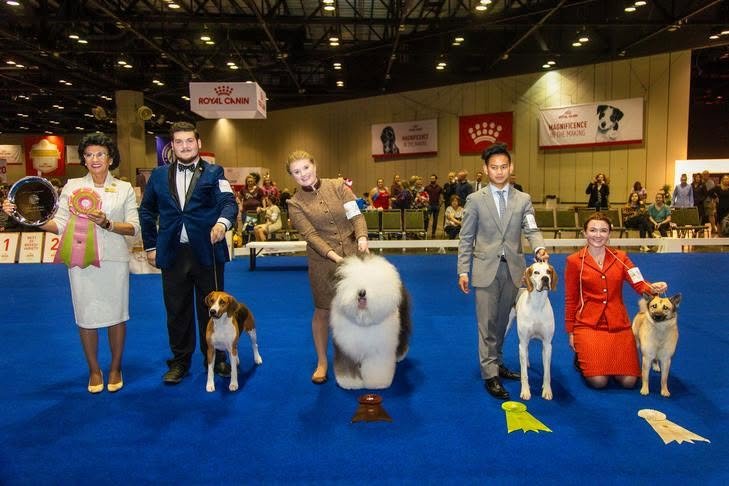
Westminster and the AKC National Championship presented by Royal Canin are both favorites of mine here in the United States. The history and caliber of dogs at Westminster are unmatched, and the quality of entries and the way the event is run make Westminster and Royal Canin a true highlight every time I’m able to attend. Internationally, Crufts is a favorite, and I’ve also loved attending the World Dog Show events hosted in different countries. Getting to see the sport celebrated on that kind of international stage never gets old.
Please tell us more about your involvement in Junior Showmanship.
Junior Showmanship is close to my heart. Both of my children, who are twins, started showing in Juniors at age nine and continued through age eighteen, so I watched firsthand what that program can teach: responsibility, poise, sportsmanship, and a genuine work ethic. Beyond my own children, I’ve mentored countless juniors over the years, many of whom went on to become professionals in the dog world themselves, and others who carried those same lessons into entirely different careers. It’s one of the most rewarding parts of this sport, watching young people grow through it.
Finally, what legacy would you like to leave within the sport of purebred dogs?
I’d like to be remembered as someone who judged joyfully, fairly, and brought an awesome energy to the ring; who respected the standards; who genuinely cared about the exhibitors and dogs in front of me; and who helped keep that same love of the sport alive in the next generation through the young people I’ve had the chance to encourage along the way.