

From the Owner Handler Leash • Elizabeth McCall McElroy
Q: Please tell our readers how you got involved in the world of pedigree dogs and which people were the most important in your beginnings.
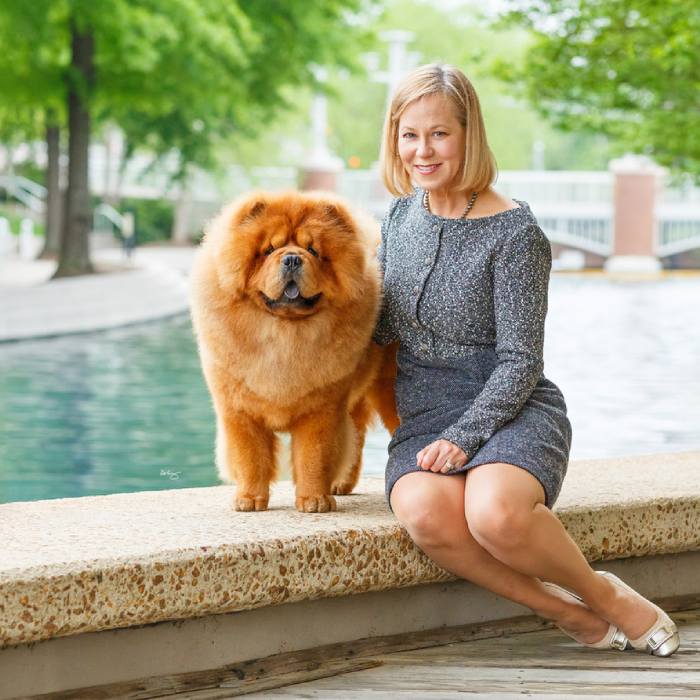
A: Rewind four years: COVID was upon us, and like so many others, I sought out a dog to add to our family. I had owned, rescued, and fostered Springer Spaniels for twenty years. By a twist of fate, disappointment from one breeder led me to another breed with opposing characteristics. An Instagram obsession shared between my young son and me, watching Chow Chow videos before bedtime, led me to take the risk and try a breed I had never met! Not an advised path for others, desiring a strong-willed, protective breed that happens to look like a teddy bear could be a big mistake. But I could speak “dog” and sought out the correct breeder for temperament.
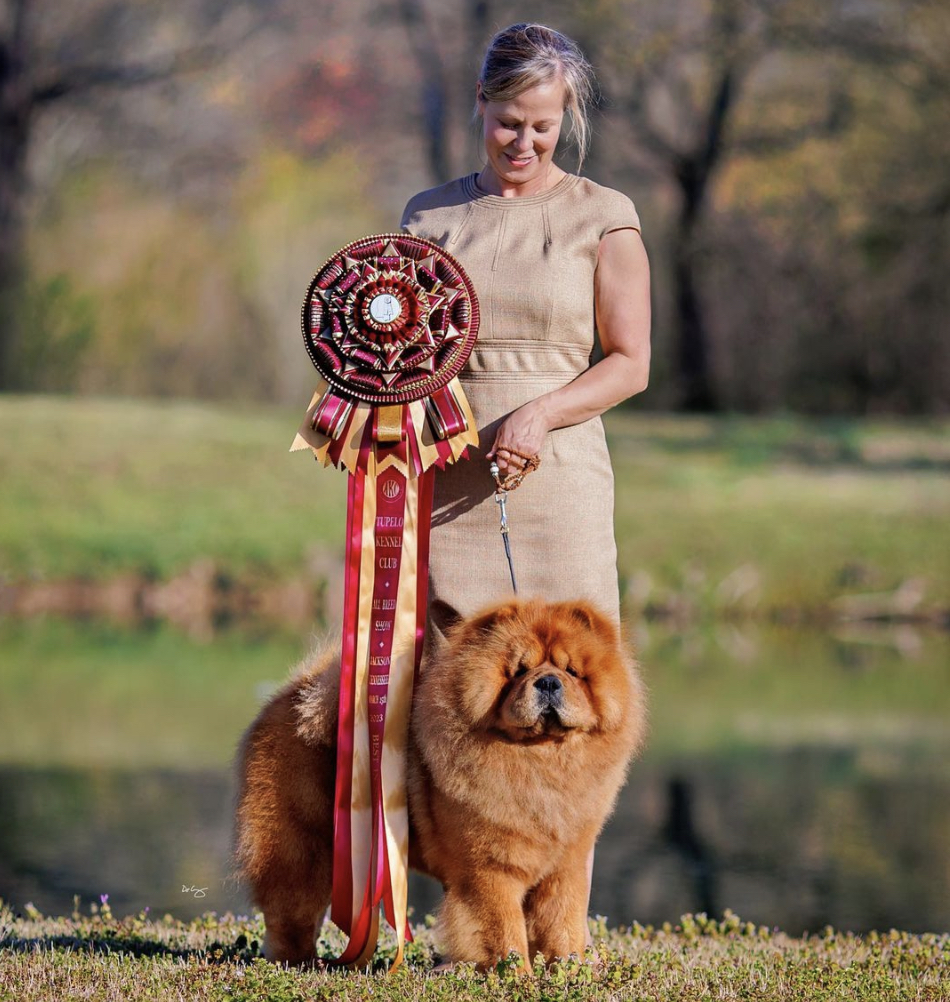
God sent me Hugo, and God sent me Amy, his breeder, my mentor, and my friend. I inquired about purchasing a cream Chow bitch in the next four to six months. Amy sent me a picture of a 10-week-old red dog, who was the last in a litter of six to find a home. My first thought was, I don’t want the dog no one wanted. Then, ping—she sent over a picture of baby Hugo, and without hesitation, I said, “Sold!” He was purchased as a pet by a family that had never owned a Chow nor been to a dog show. Amy Frick of Rio Chows in the Atlanta area quickly finished his Champion and Grand Champion titles. I tried my hand on the lead and instantly learned humility. Over the next six months in the ring, Amy coached me after every confusing, embarrassing, and defeating moment until she said, “OK, you are now ready for the real training!” She spent a few hours going over precise handling skills. I had to fail to learn. Curiosity and courage kept me coming back to learn more about how to be successful with this breed. I took him to the No. 4 Chow ranking in 2022 and the No. 2 Chow ranking in 2023. Currently ranked as the No. 1 NOHS Chow and in the Top 25 NOHS All-Breed standings, Hugo earned his Grand Champion Gold status this year. I would not be writing these words today had Amy not guided my growth. She is a treasure to the Chow Chow breed and instrumental in bringing new people into the Fancy.
Q: What breeds of dogs have you shown over the years, and which breeds are your favorite to work with?
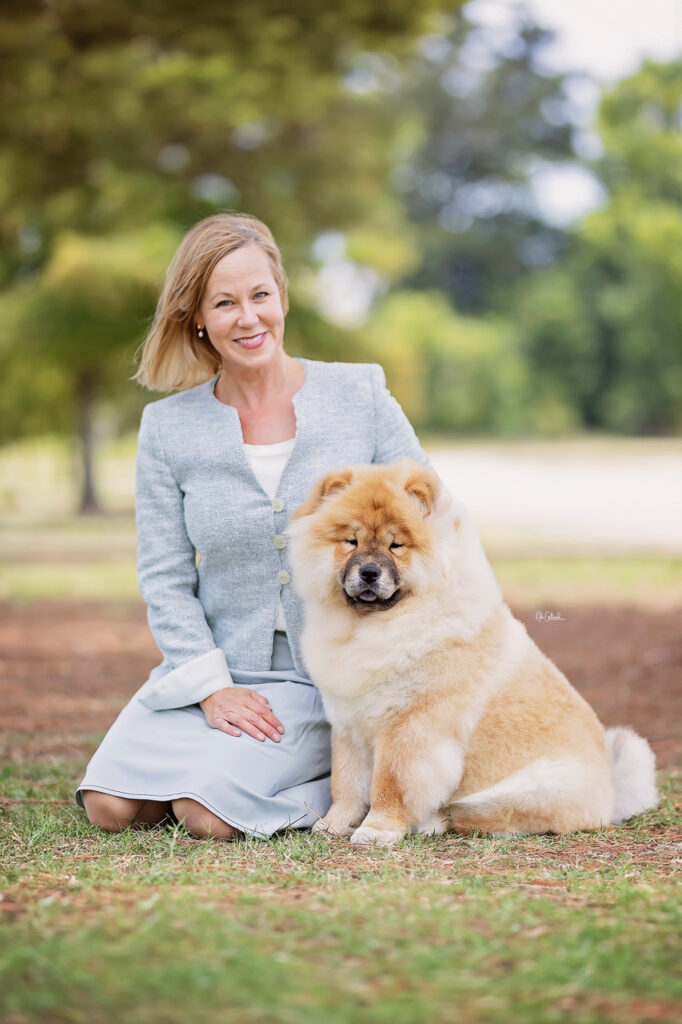
A: I have only been exhibiting dogs for two years. While Chows are my breed of choice, I also finished my Australian Shepherd’s championship this year. She is the yin to the yang of the Chows! A beautifully moving Aussie on a loose lead is fun to show. She brings me so much joy.
I find showing a Chow to be a gamble because you never know what is going to show up that day. I love the challenge of a stubborn breed. Can I be prepared to do my best by the dog before leaving for the show? Can I have him in the right headspace and coiffed perfectly on the morning of the show? And in the ring, can I manage any shift in mood or energy? Winning, for me, is not found in being handed a ribbon, but in whether I showed the dog to the best example of the breed.
Q: Please share with our readers some of your highlights in the show ring as an owner-handler so far.
A: I am truly honored when a judge sees past the novice, awkward handler and recognizes the beauty and strength of my dog. Hugo has received two Reserve Best in Show wins in lineups among the country’s top dogs. Those wins will forever be imprinted in my memory.
I am also proud that this young Chow, who needs a few more years to be considered mature, has won an Award of Merit at five of the six Regional Specialties during Chow Chow Club, Inc. National Week over the past three years. To me, that demonstrates the consistency I want from him.
I look forward to his future, as well as the future of my new puppy, Honey, who has won six Best Beginner Puppy in Show awards. Winning those ribbons was a blast because she was so new to me. As an imported dog at four months of age, she barely understood English—or even her name—at the time.
Q: What makes you more excited—winning an All-Breed Best in Show or a Specialty Best in Show?
A: An All-Breed Best in Show means your dog had to win at three different shows under a variety of judges in one day. To me, that is the ultimate win. However, a National Specialty Best in Show would be equivalent—or even better! Both are dreams of mine.
My breed is on the low-entry list, and our specialties vary in attendance. Whether it is in breed or group competition, I always value the win based on who is in the ring with me that day, not by the color of the ribbon.
Q: On the whole, do you believe there are too many all-rounder judges judging your breed and not enough breed or group specialists?
A: I am happy with the number of all-rounder and group specialist judges. I feel their knowledge of a variety of breeds and their years in the Fancy benefit our breed.
Where I would like to see a change is for NOHS (National Owner-Handled Series) to one day have group-approved judges assigned to their respective groups at every show. The NOHS is instrumental in the development of future breeders because it encourages the joy of the sport, the fine-tuning of skills, camaraderie among fellow owner-handlers, and quicker introductions to new judges.
Q: Westminster or Orlando? Also, how do you feel about not having Westminster at the Garden anymore?
A: I have yet to attend Royal Canin in Orlando, but I look forward to that day. Without question, Westminster is an institution! An event steeped in tradition, pomp, and circumstance, it has all the excitement you would desire in a world-class sporting event.
My involvement in dog shows began after COVID, so I have yet to experience “The Garden.” I have attended the shows at Lyndhurst and Arthur Ashe Stadium. I am very pleased that the Westminster Kennel Club Dog Show has moved back to February. It is a big win for Arctic and double-coated breeds that lose their coat in spring, though it may pose a challenge for this Southerner to make the pilgrimage north in the snow!
Q: Where in the world do you think your breed has the best quality?
A: I applaud the North American breeders who emphasize health testing in their breeding programs. We need healthier hips and elbows in Chows. Hugo and his breeders, Amy Frick and Andrew Eugenio, were awarded the Health Award of Excellence by the Chow Chow Club, Inc. for passing a lengthy list of health clearances.
Chows do not have a one-size-fits-all look; they vary in aesthetics, coat amount, size, and scale. Two Chows can look very different and still meet the standard.
The top two Chows currently in the USA are outstanding, and I feel they would be successful anywhere in the world. Personally, I love my American-bred Chow’s face, coat, and movement. However, I also appreciate the aesthetics of Asian-bred Chows, which present with an upstanding, dignified elegance without being too heavy or overdone. I recently selected my foundation bitch from a South Korean breeder who breeds for these traits. She moves beautifully with the correct stilted gait that is iconic to Chows.
Q: How do you feel regarding the number of shows held weekly around the country?
A: The expense of travel can be discouraging, but I do feel there are a good number of shows to choose from in my region. Staying ranked in a low-entry breed can be difficult when regional competition is scarce. The NOHS has been a good fit for me when I am the only Chow entered. Driving long distances for entries is not as important when I focus on my ranking in that category.
Q: Would you ever consider becoming a judge one day?
A: No, I don’t think I will pursue judging. However, I would be honored to help at the breed Sweepstakes or B-Match level should I be called upon to do so.
Q: Is there any advice you would like to give to both Professional Handlers, Owner-Handlers, and judges?
A: Be gentle with new exhibitors and class entries. Starting out takes great courage and is compounded by big emotions, personal risk, and very little mentorship for most beginners. We all enter the dog world as strangers. It only takes a few welcoming people to help ensure the longevity of a breed in conformation.
Chows prefer to be approached from the front, not the side, with the teeth and mouth examined last.
For fellow low-entry breed exhibitors, don’t always follow those building majors. Take your time building confidence in your dog at shows where you might be the only entry. With less stress from a large-entry show, you and your dog can forge a confident team without the eyes of competitors on you. Plus, you get to show in groups!
Q: What is your favorite way to unwind on days off? Do you have hobbies outside of the dog world?
A: Once cooler weather sets in, Hugo and I both love to hike our nearby mountain trails. I normally have some interior renovation project half-completed that needs my attention. But I’m a mom first. Most of my extra time goes to my son and making sure his childhood is magical. Traveling with him and my husband to Atlanta and other cities keeps us busy, and the laundry never seems to get folded.
Q: You have the power to change dog showing for the better. What would you change?
A: Human emotions run deep when competition is at stake, and they run even deeper when experience is limited. I would hope that juniors and new exhibitors are shown the best side of human nature in the sport. I also hope that the leaders of the sport and the breed reflect respect for the dignity of every person and dog, especially those new to the sport.
Q: Is there something that recently moved you?
A: I arrived late to a show with one crate, hoping to find free grooming space. It wasn’t looking good for me, as I kept getting turned away. A professional handler saw my struggle and said, “Follow me, we have extra room.”
It was just the two of us and a few German Shepherds. She moved some tables over and brought a power cord to me. As I looked around, I noticed a couple of Best in Show ribbons casually tossed on a crate. This level of kindness is contagious. The opposite behavior can be equally contagious if you let it.