

Judging the Bedlington Terrier Centenary Show in the UK
Becoming • by Jacquelyn Fogel
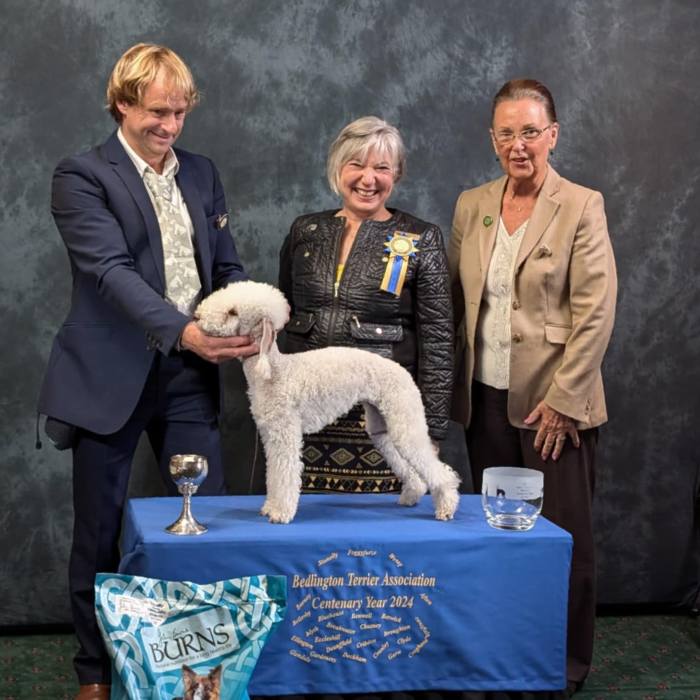
Two years ago, I was asked if I would be available in October 2024 to judge the Centenary Bedlington Terrier Association Show in Coventry, UK. I have trouble planning two days ahead, much less two years, but of course, I said yes. So began a two-year process to get me approved to judge in the UK and to plan a trip for Darling Husband and me to get there. Although two years seemed like an excessive amount of time to prepare, Darling Husband and I also decided to move from Wisconsin to Nevada in the middle of that timeframe. The time sped by.
I cannot understate the honor that this assignment brought to me. Not only was it the 100th anniversary of the UK Bedlington Terrier Association, but it was also going to be in the country of origin for my breed. Bedlingtons originated in Northeast England, and the English standard for the breed is the one all succeeding registries, including the AKC, used to create their own standards. This was going to be the opportunity of a lifetime. I was over the moon with excitement.
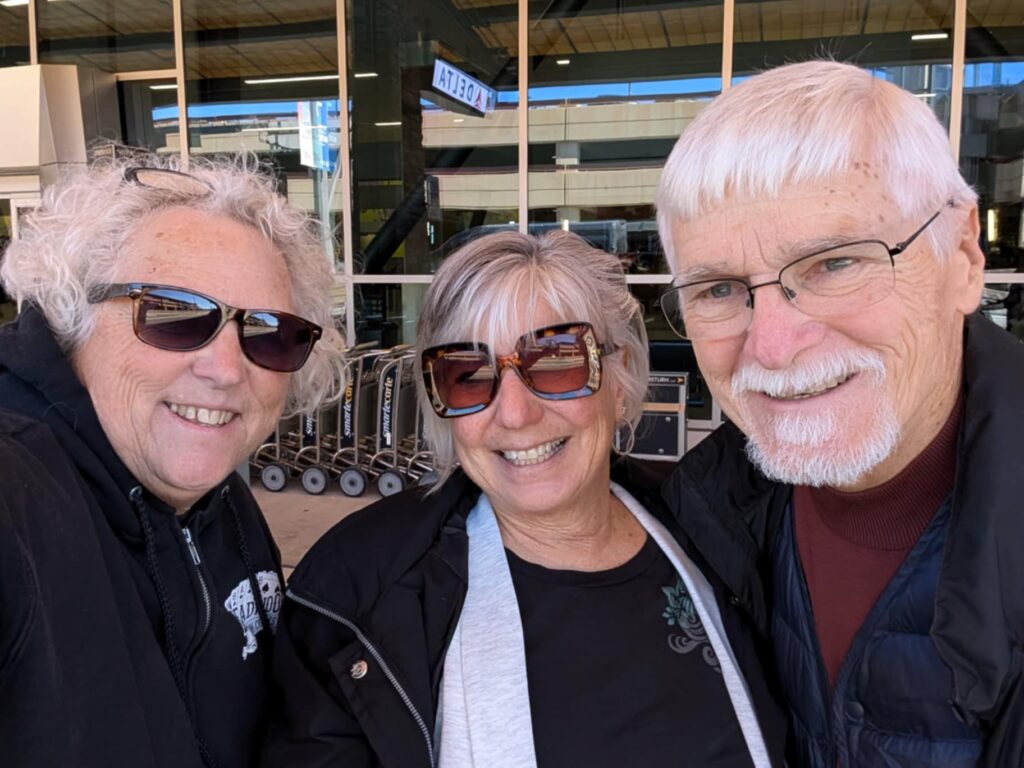
I was in regular contact with the club’s secretary, and as the date approached, she began to ask if I had made travel plans, which airport I planned to arrive at, whether I would arrive 1 or 2 days in advance, and what we wanted to select for dinner at the banquet scheduled the night before the show. Was I familiar with the British standard for the breed, and did I need her to arrange any transportation to Coventry? About 6 weeks out, I thought I should probably look at a map of the UK and begin to make our travel plans. Although we were going to be very close to Birmingham, I could not find a convenient flight to that city, so we ended up flying into Heathrow in London. I thought we could take a train into Coventry. Fortunately, I sat next to a UK native on the plane, and he explained that we’d have to change trains twice and still would not get all the way into Coventry. Since we were arriving mid-morning on the day before the show, my plane neighbor suggested we might want to Uber instead. He calculated the cost (and was within $10 of our actual fee), and I agreed that made the most sense for two people entirely inept at navigating train schedules in large urban areas. Door-to-door service was exactly what I wanted.
We arrived at the hotel just as the first day’s judge was taking a lunch break in the early afternoon. We met several of the club officers and event organizers, had a mid-afternoon snack, then went to our room for a 3-hour nap before dinner. The hotel we stayed in was about 150 years old and quite charming. Our room was on the second floor, plus some additional stairs. There were no elevators and no hotel porters. Tom and I remembered why it is so important to pack light when traveling in Europe because we had to carry our luggage everywhere. We were quite comfortable but worried that we only had one phone charger for two phones. It didn’t matter. I simply moved the charger from one phone to the other on one of my middle-of-the-night bathroom visits. Other than the lack of a converter, everything else was fabulous.
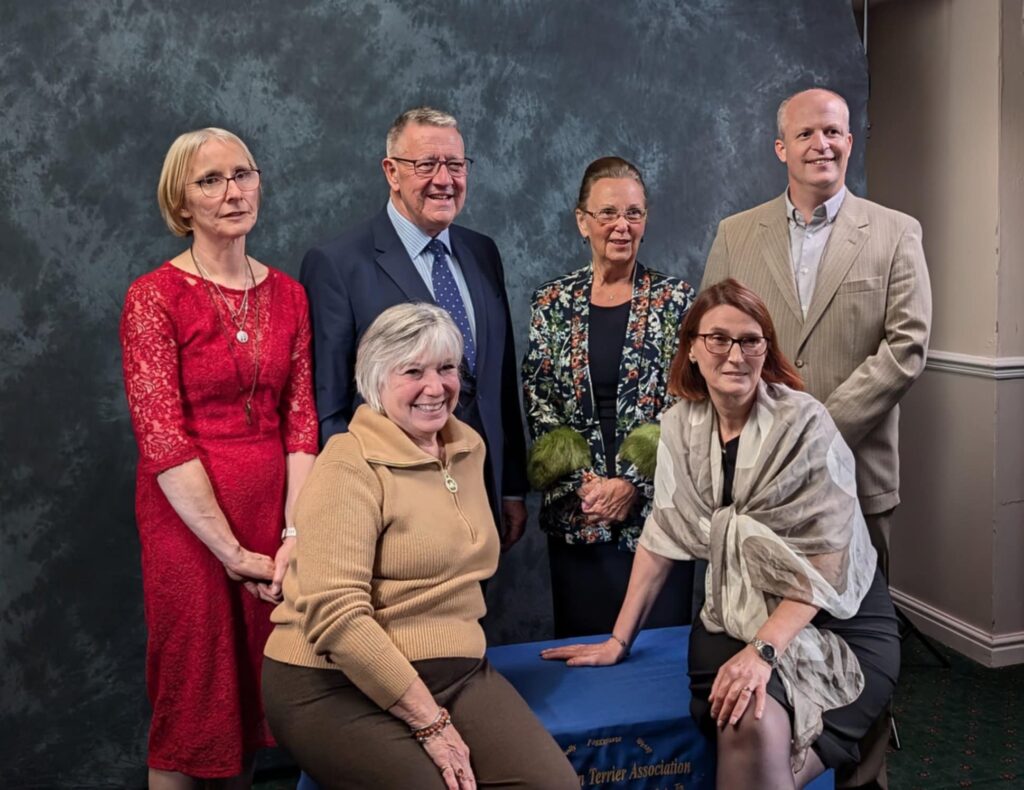
Dinner was at 7:00 p.m., and we arrived shortly before that time. As we entered the room, there was a table with champagne and orange juice for us to choose from. I chose champagne, and Tom chose orange juice. Most people were already seated, so we were directed to our spot immediately. Apparently, dinner at 7:00 means something different in the UK than it does in the States because everyone else had already been seated quite a bit earlier. Tom and I were seated at the front table, along with the Secretary, Club President, that day’s judge (who was from France), the Patron, the Chief Ring Steward, and his granddaughter. The rest of the club members were also invited to attend. It was a lovely dinner, which included Yorkshire pudding, one of my favorites. The secretary and I decided to combine some of the champagne with orange juice to create Mimosas. It was quite fun! We didn’t know that meal was going to be the food highlight of our entire adventure through England and Ireland, but sadly, it was. They had a DJ after dinner, and that seemed to be everyone’s cue that it was time to leave.
For weeks before we left the States, I had been getting requests from Bedlington exhibitors here to be able to watch the judging. I had assumed the club would arrange to video this event and that I could direct people to that website, but I was wrong. They had made no plans for a video. I asked the club President if anyone would object if Darling Husband, Tom, livestreamed the event on Facebook. She conferred with the Chief Ring Steward and the Club Patron, and no one offered an objection. So, at the very last minute, the club secretary and I made a plan to set up the video. This was somewhat difficult because we had not brought any adapters for our charging cords, and the hotel could only find one to loan us. We surveyed the show area and determined where the best spot would be for Tom to sit and video the judging. We repositioned the examination table for a good view, and the Chief Ring Steward immediately came over and positioned it back the way he wanted it. Apparently, only some changes were acceptable, but rearranging the actual ring set-up was not one of them.
Tom had never done a livestream video with a phone. He had no experience and rarely watched the videos I did. He was nervous but totally willing to give it a try. I immediately created an event on my Facebook page and sent out the notifications to everyone on my friend list. I honestly thought we would have no viewers for the first 3 or 4 classes because the time change had us starting at 4:00 a.m. EDT – but at least we would have it recorded.
Several of us retired to the hotel lounge after dinner and video planning for cocktails and light conversation. The Chief Ring Steward and the Club Patron (I don’t really know what that position is) went over a few procedural items with me, and we agreed to meet again in the morning about an hour before judging started to make sure I understood the British standard. I was looking forward to that meeting because I had some clarifications I needed from people who had judged according to that standard.
Tom and I woke up early on my judging day, had a light breakfast, and I went to my meeting while he tried to figure out how to use my phone as a camera. My meeting was fascinating. We discussed the AKC and the British standards. They were satisfied that I understood the standard well enough to pass judgment on their entry. However, when I asked for their advice on how to interpret the words “rolling” and “mincing,” which appear in the British standard but not the AKC standard, we could not come to an agreement. I told them my interpretation of rolling was the description of Old English Sheepdog movement, and mincing as the description of Miniature Pinscher gait, but they did not like that interpretation. Finally, they both agreed that I should judge the UK entry the same way I would judge Bedlingtons in the U.S. – looking for correct structure and a unique lightness of movement at slower paces. They explained the ring procedure in detail and reminded me to write a critique of the top 3 dogs in each class.
My entry was 72 Bedlingtons. The actual judging was an absolute pleasure, but the need to write something about each of the top 3 dogs in every class was daunting. I brought my notes home with me, and it became clear that, as the day progressed, my detailed analyses became less and less specific. I had been advised by a Canadian judge, who was used to judging in Ireland, that I should think of three items to write about and start the critique with a compliment. I did well with that format until partway through the bitch classes, when generic observations like “moves well” started appearing in my comments much more frequently than specific details. While I appreciate the concept of a written critique, I am not entirely sure that they are helpful in the long run. If I tell an exhibitor that their dog did not converge or had a wheel back, they could easily dismiss it as just one person’s opinion. By the end of the assignment, the comments I made were starting to sound like the famous “I just liked the other one better today” remarks that so many AKC judges use when asked why they did not select a particular dog.
At one point during my evaluation, I had two dogs do a down-and-back together so I could see the differences as they moved side by side. I was immediately admonished by the Chief Ring Steward that UK judges are forbidden from moving the dogs that way. I got the distinct impression that I was moving my entries a lot more than they were used to. I discontinued that particular pattern but decided that I was not going to sacrifice movement for a stacked portrait. I continued to move the dogs multiple times in the larger classes. I had been approved to judge as I would in an AKC show, and I took that advice literally.
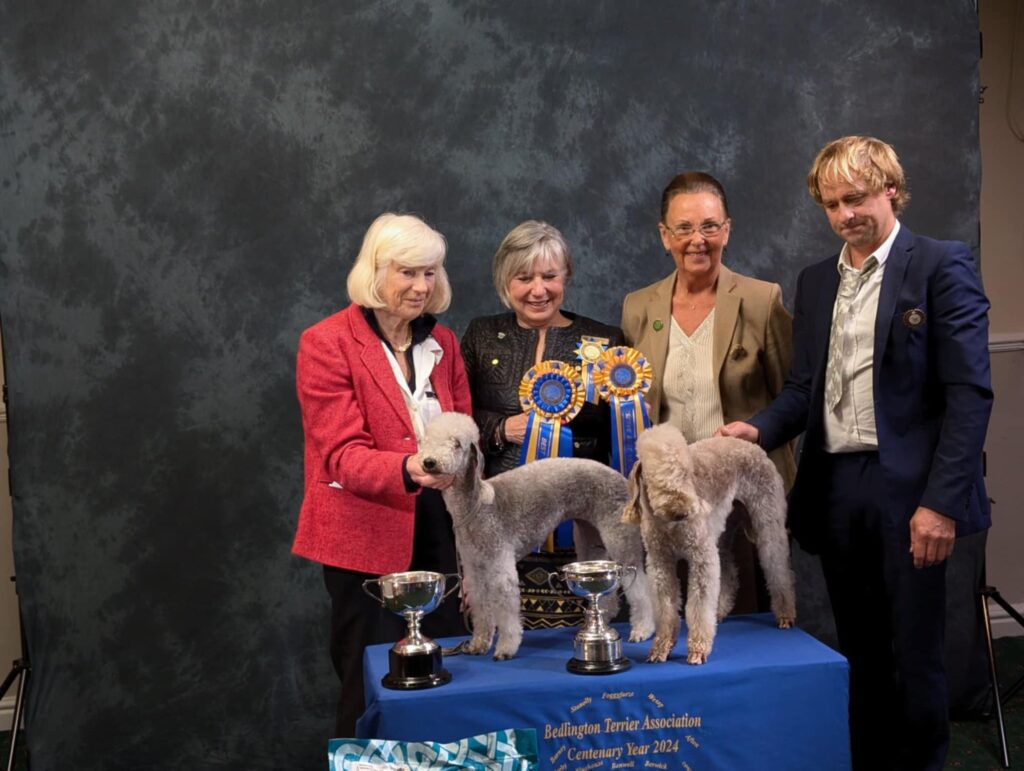
In general, there were things I really liked about the entry, and things that made me worry about the direction UK breeders are heading. I love that size is important to UK breeders. There were no dogs that were even close to being outside the standard size recommendations for the breed. They were all well within the standard, and none of them could be considered coarse or heavy-boned. In general, the heads were good to excellent, with nice refinement—no wide back skulls with prominent zygomatic arches—and many had nice small, dark eyes. Bodies were mostly narrow, and shoulder blades were flat. Feet were good. But many lacked good angulation in both front and rear. Most disturbing was the lack of converging fronts—a trait unique to our breed that is all but lost in the UK. There were many shallow chests and some wheel backs. I don’t think UK breeders care too much about angulation, and that is understandable if the judging does not emphasize movement. Breeders will bring to judges what gets rewarded. It is not a huge shock that the dogs I used for Specialty Best in Show and Best of Opposite to Best in Show were imports—the first from France, and the second from Northern Ireland, down from Russian and Australian lines. Much of my bloodline comes from the Foggyfurze line in England, but I saw few of the qualities found in that bloodline in the current entry.
When we returned home, I had to produce a written report that included all of my notes on the dogs I judged. I did not expect this additional homework but was happy to oblige.
I sincerely loved meeting the breeders and the club officers. All the exhibitors were quite congenial. The atmosphere lacked the intensity of large AKC shows. Grooming was definitely not as important in the UK as it is in AKC shows, and handling skills varied a lot. Professional handlers, as we know them in the States, were non-existent. The atmosphere was more like a fun match than a National Centenary show. I thoroughly enjoyed the entire assignment. This was an adventure of a lifetime, and I am so pleased to have been given the opportunity to be a part of the Centenary Bedlington Show in 2024.